 FreeWill Labs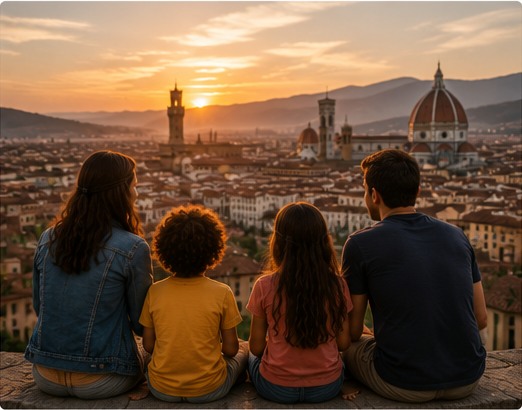
A Textbook Has to Create the World in Your Imagination
Travel can put you inside it.
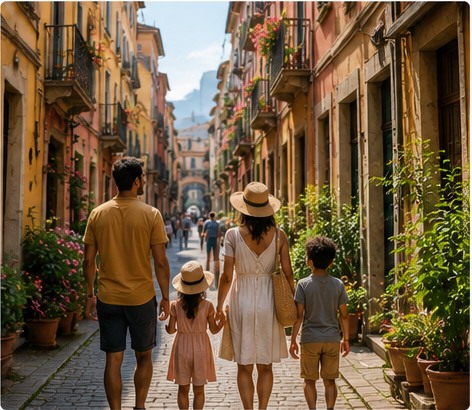
A child can read that a castle had defensive walls. Then they can stand underneath one. They can read that medieval streets were narrow. Then they can walk through them. They can learn that a famous painting is enormous. Then they can stand in front of it and realize that the reproduction in a book gave them no sense of scale at all.
Real places provide context.
Place Creates Questions
Something interesting happens when children encounter evidence in the real world. They start asking questions adults didn’t necessarily plan.
Why are these stairs so narrow? Why is the doorway so small? Why did they put the city here? How did they move these stones? Why is this person missing from the story?
Those questions are valuable because they’re generated by observation. Curiosity came first. Information follows.
Physical Scale Changes Understanding
Numbers are abstract.
A 2.5-mile historical route is a fact. Walking it creates an understanding of distance. Reading that thousands of people gathered somewhere is information. Standing in the space lets a child imagine the crowd.
Learning that a building took generations to complete sounds impressive. Looking up at the ceiling makes the time feel different.
Memories Create Anchors
Children won’t remember everything they learn on a trip. Neither will adults.
But experiences create anchors.
A child may later encounter the American Revolution in school and think: I’ve been there.
Rome appears in a textbook: I’ve seen that.
Van Gogh comes up in art class: I remember standing in front of one.
New knowledge now has somewhere to attach.
Emotional Context Matters Too
Learning while traveling isn’t only visual.
There was the heat that day. The strange street. The pastry afterward. The funny thing your sibling said. The enormous room. The moment everyone got lost. The discovery you made.
Information becomes attached to a lived experience. That’s difficult for a worksheet to reproduce.
You Don’t Need to Turn Vacation Into School
This is important.
The goal isn’t to maximize educational output from every vacation day. Children don’t need quizzes at dinner. You don’t need learning objectives for the Louvre.
Travel is already full of learning. Our job as adults is often simply to create opportunities for children to notice, wonder and ask.
A little structure can help. A challenge. A story. A question. A mission. Then let the place do the rest.
That’s the Adventure Quest Idea
Adventure Quest was built around a simple belief: the real world is already interesting.
Kids sometimes just need a reason to look more closely. The phone isn’t supposed to become the adventure. The place is the adventure. Technology simply helps open the door.
Return to Adventure Quest Journal: Issue No. 2 — History Comes Alive