 FreeWill Labs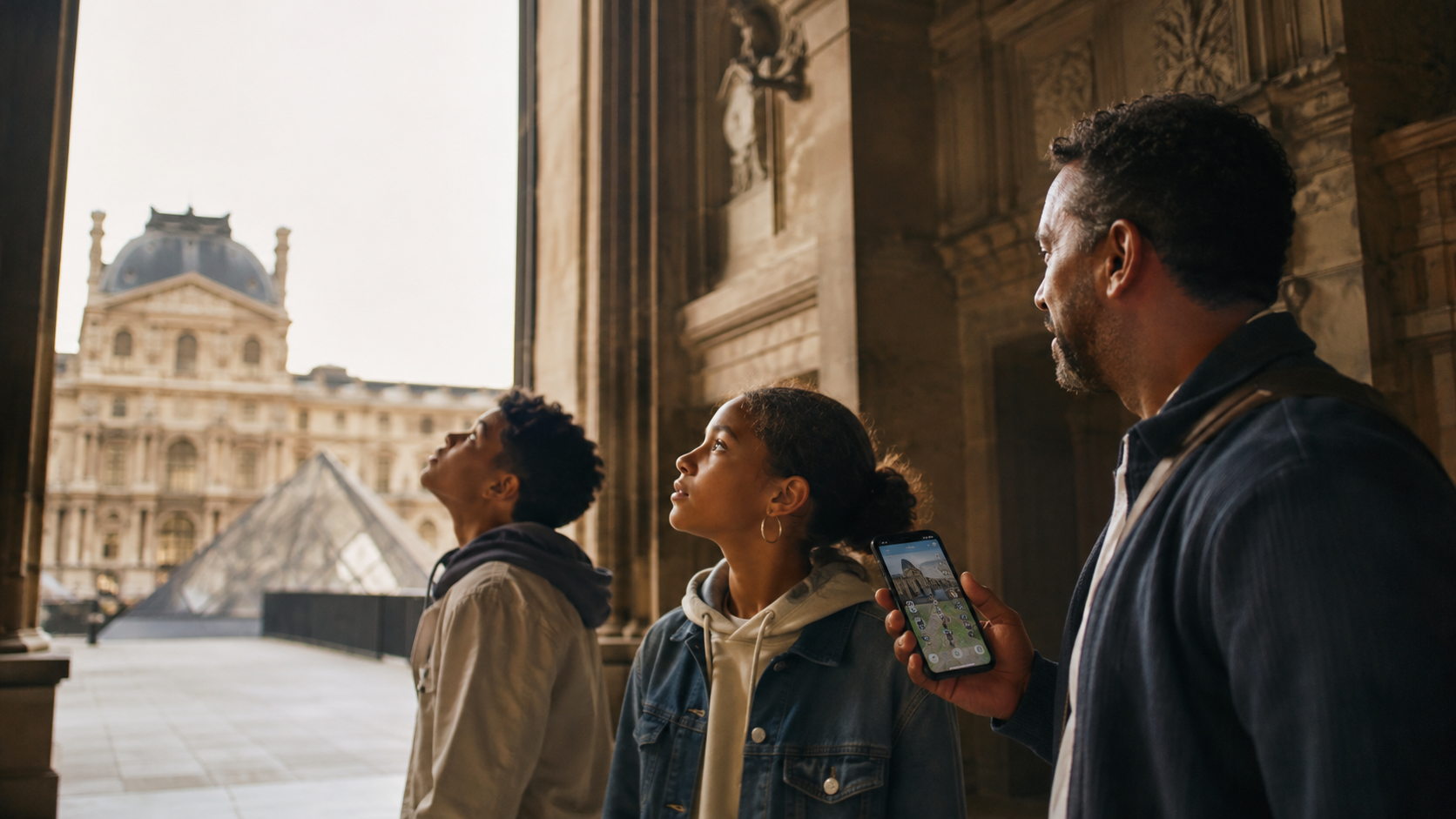
There is a big difference between building a travel product at home and actually using it while traveling.
This summer I got to do the second one.
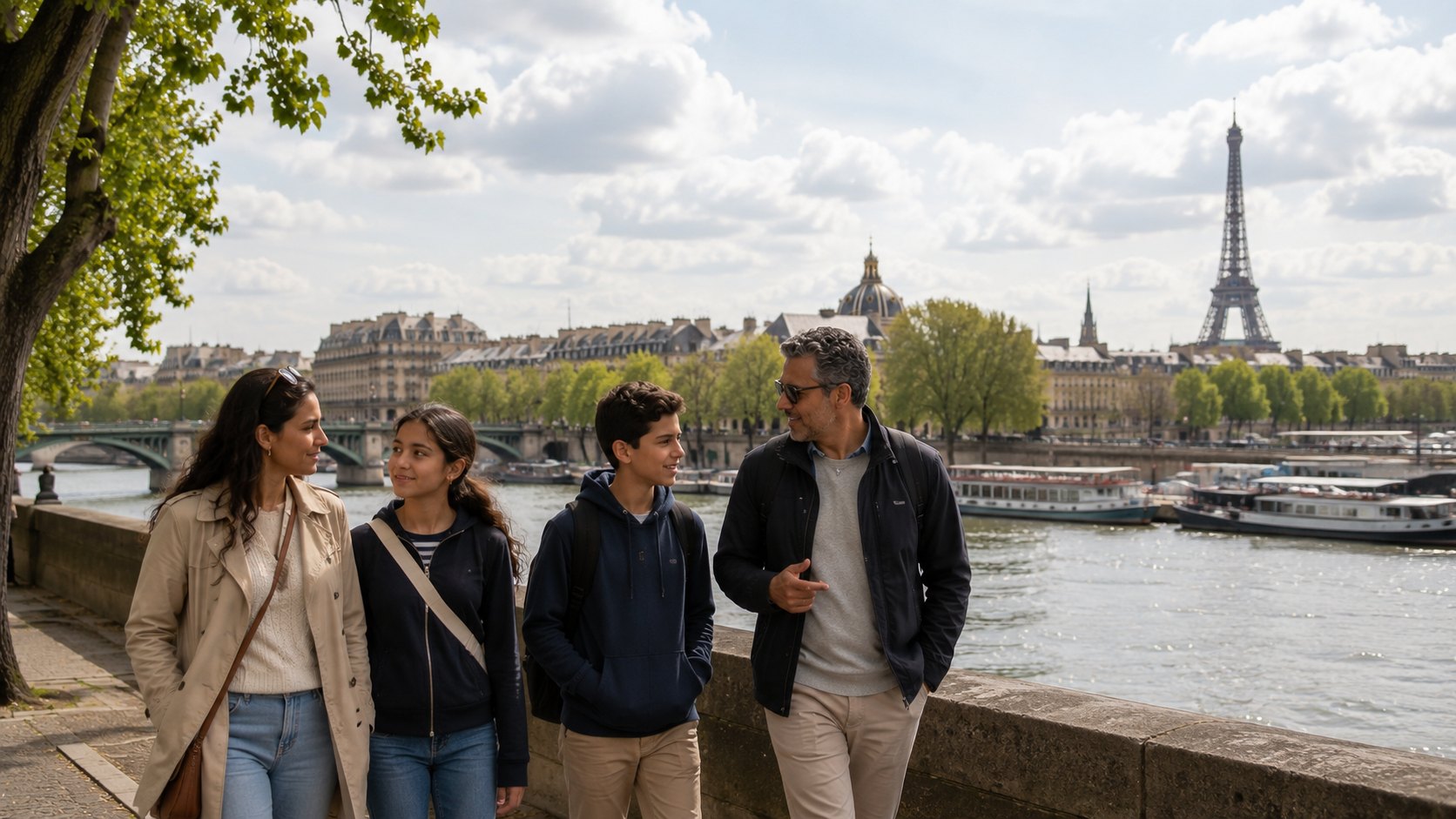
We took Adventure Quest through parts of our family trip in Paris, Amsterdam and Iceland.
I had spent months thinking about missions, collections, recaps, destinations and how Adventure Quest could help families engage more deeply with the places they visit.
Then I handed it to my actual kids in actual Europe.
They did what kids are particularly good at doing.
They ignored some of my assumptions.
And that was incredibly useful.
The Louvre was the clearest success
I wasn't sure how Jade and Enzo would handle the Louvre.
It's enormous. It can be crowded. There is an overwhelming amount to see.
We also entered later than we'd originally planned, so conditions weren't exactly perfect.
Adventure Quest gave them eight discoveries to complete.
That gave them somewhere to start.
They looked for recognizable faces. They explored different kinds of art. They photographed things. They noticed details.
And they completed all eight discoveries.
But the most important part happened afterward.
They wanted to keep looking.
Adventure Quest hadn't become the experience.
The Louvre had.
The game had simply helped them cross that initial gap between walking through a giant museum and actively looking at what was around them.
That distinction matters to me.
Notre Dame taught me something different
Jade used the Notre Dame Adventure.
Some of the missions involved things like gargoyles and flying buttresses.
And then she started asking me about them.
Suddenly I wasn't trying to convince my child that Gothic architecture was interesting.
She had noticed something herself and wanted an explanation.
That produced a very different interaction:
Notice → wonder → ask → talk about it together.
That's much closer to what I want Adventure Quest to create.
The mission doesn't have to teach the entire lesson.
Sometimes its job is just to generate the question.
Van Gogh worked—but the Louvre still won
In Amsterdam, the kids used the Van Gogh Experience.
They engaged with it much better than they had during our spontaneous visit to the Picasso Museum in Paris.
But they still weren't as fascinated as they had been at the Louvre.
That was useful too.
I can't build a mission that magically makes every child love every museum.
And I shouldn't try.
Adventure Quest can create an invitation to look more closely.
It can't—and shouldn't—manufacture interest that isn't there.
The destination still has to do some of the work.
Iceland showed me when not to add more
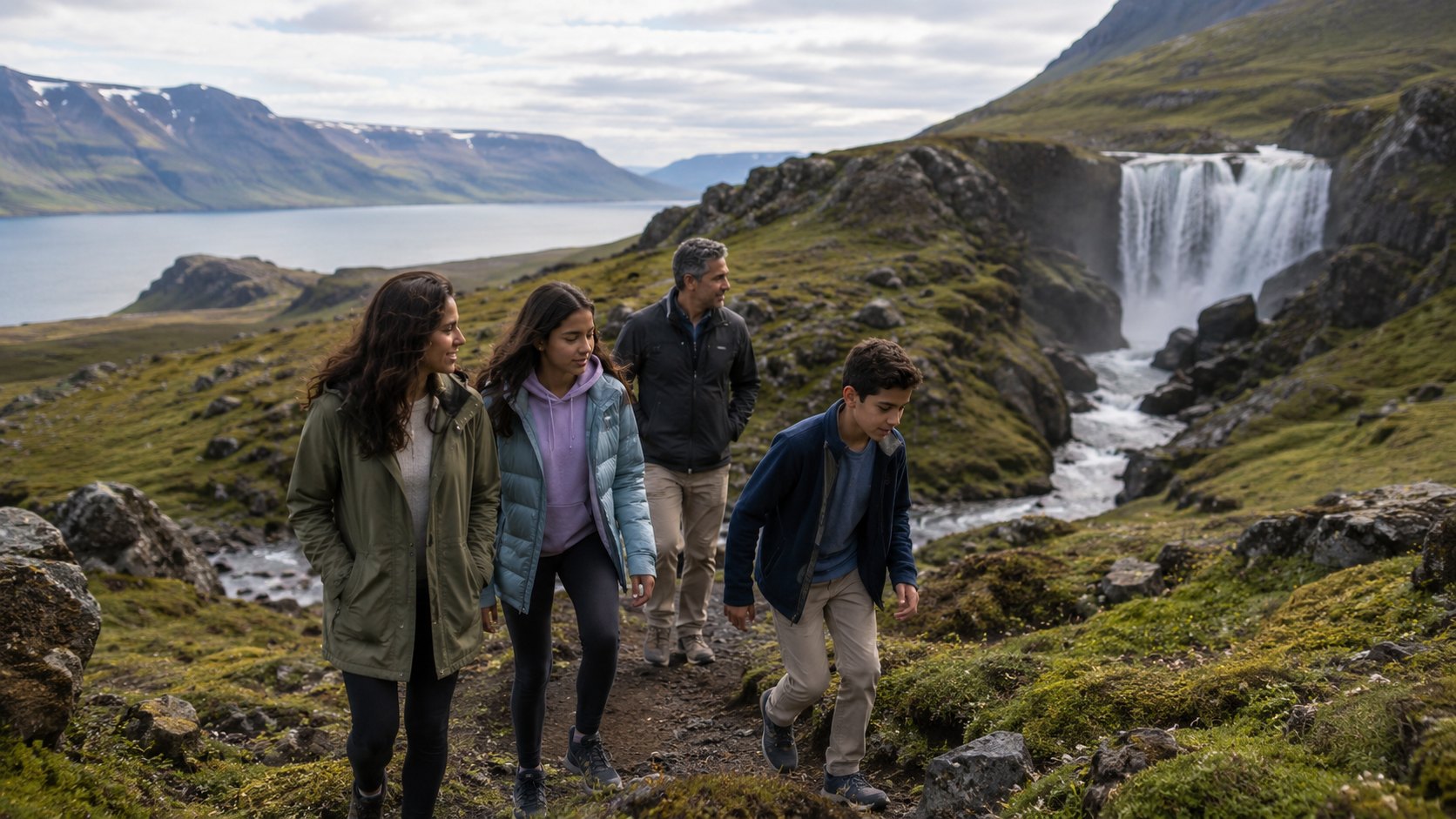
Some of the strongest moments in Iceland didn't need Adventure Quest at all.
The kids were hiking toward waterfalls.
They were climbing on volcanic rock.
They were looking at geothermal landscapes.
They were already engaged.
Adding another activity wasn't necessary.
That's probably one of the most important things I learned during the entire field test:
Adventure Quest shouldn't compete with an adventure that's already working.
If a child is standing in Iceland completely absorbed in climbing volcanic rock, I don't want a parent saying:
“Stop. Look at the phone. We have a mission to complete.”
That would be exactly backward.
The product should help people engage with the real world—not interrupt them when they're already doing it.
Then I became the player
On one of our Iceland waterfall hikes, something unexpected happened.
The kids didn't need the game.
But I wanted to play it.
We were hiking to three waterfalls over the course of the afternoon.
I opened the Iceland Waterfall Adventure and completed eight discoveries myself.
The missions gave me things to notice and reasons to capture moments along the way.
At the end, Adventure Quest created a recap from the experience.
And I loved it.
It wasn't just another collection of pictures buried in my camera roll.
It felt like a record of an adventure we had actually completed.
That expanded how I thought about the product.
Adventure Quest might have started with the problem of helping kids engage with family travel.
But curiosity isn't exclusively a children's problem.
Neither is wanting to remember what you experienced.
We barely used the generic adventures
This may have been the most strategically useful lesson.
When we were actually traveling through Europe, we gravitated toward destination-specific experiences.
The Louvre.
Notre Dame.
Van Gogh.
Iceland waterfalls.
History, architecture, museums and places with a real story gave Adventure Quest something meaningful to work with.
The more generic, play-anywhere adventures weren't what we reached for.
There was already too much interesting context around us.
That has influenced how I'm thinking about the Adventure Quest catalog going forward.
I'd rather build fewer experiences that make someone notice something meaningful about this particular place than fill the product with generic activities simply to have more content.
I came home with a clearer product principle
Before the trip, I thought a lot about engagement.
After the trip, I think more about when Adventure Quest deserves someone's attention.
Sometimes the product can help a child cross the threshold from passive sightseeing to active curiosity.
Sometimes it can prompt a question that turns into a conversation with a parent.
Sometimes it can help an adult notice and capture more of an experience.
And sometimes the best product experience may be putting the phone away because the real-world adventure has already taken over.
That doesn't feel like a failure.
It feels like the point.
Adventure Quest shouldn't compete with the destination.
It should help you notice more of it—and know when to get out of the way.