 FreeWill Labs
I plan a lot.
I like knowing where we're going, what requires tickets, how we're getting there and which experiences are important enough that I don't want to leave them to chance.
Our Europe trip was certainly planned.
But some of the most useful things I brought home weren't souvenirs.
They were corrections to the way I think about what makes a family trip well planned.
More isn't better
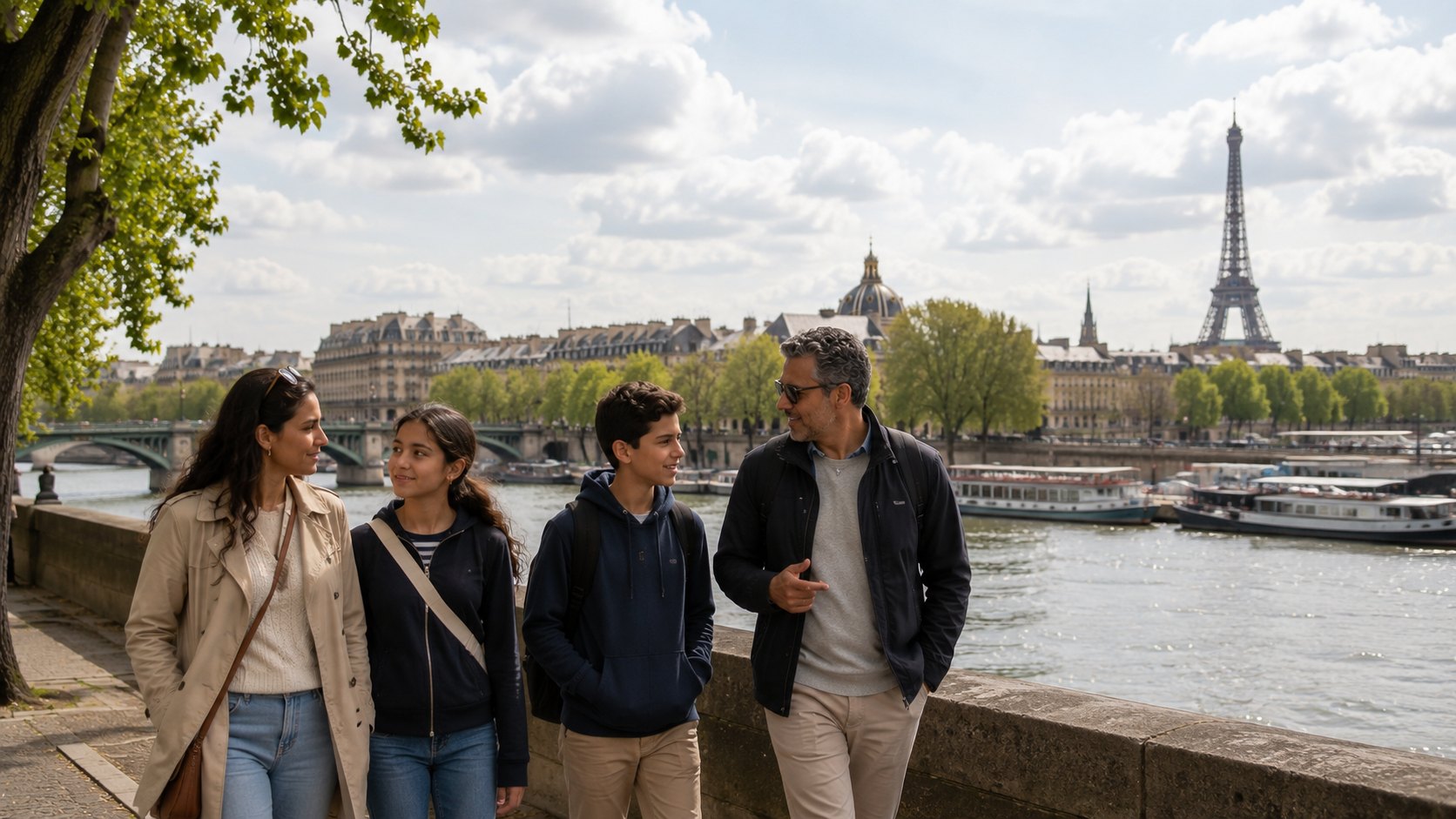
In Paris, I generally planned around one or two anchors each day.
A major landmark.
A museum.
A neighborhood.
A meal or another experience we were excited about.
That turned out to be about right.
There was still plenty of walking. Plenty of Metro rides. Plenty of shopping. Plenty of deciding that everyone needed food or ice cream.
We could have packed more into those days.
I'm glad we didn't.
A family itinerary isn't successful because you managed to fit nine attractions into Tuesday.
It's successful if the people you're traveling with still want to participate by Wednesday.
I no longer consider a giant step count an accomplishment
We walked a lot in Europe.
There were days when we were probably doing the kind of step counts that look impressive when your phone congratulates you afterward.
But I came home less interested in that metric.
Paris had relatively pleasant weather during much of our sightseeing, and even then, that much walking was tiring.
On a hot-weather trip, trying to maintain the same pace would be miserable.
I want to use trains, Metro systems, taxis, Uber and whatever other transportation makes sense to preserve energy for the places where walking actually matters.
I don't need to prove we experienced a city by exhausting everyone in it.
Recovery time is part of the itinerary
One of the best things we did after visiting the Eiffel Tower was take a boat ride along the Seine.
Our legs were tired.
We sat down.
And Paris continued coming to us.
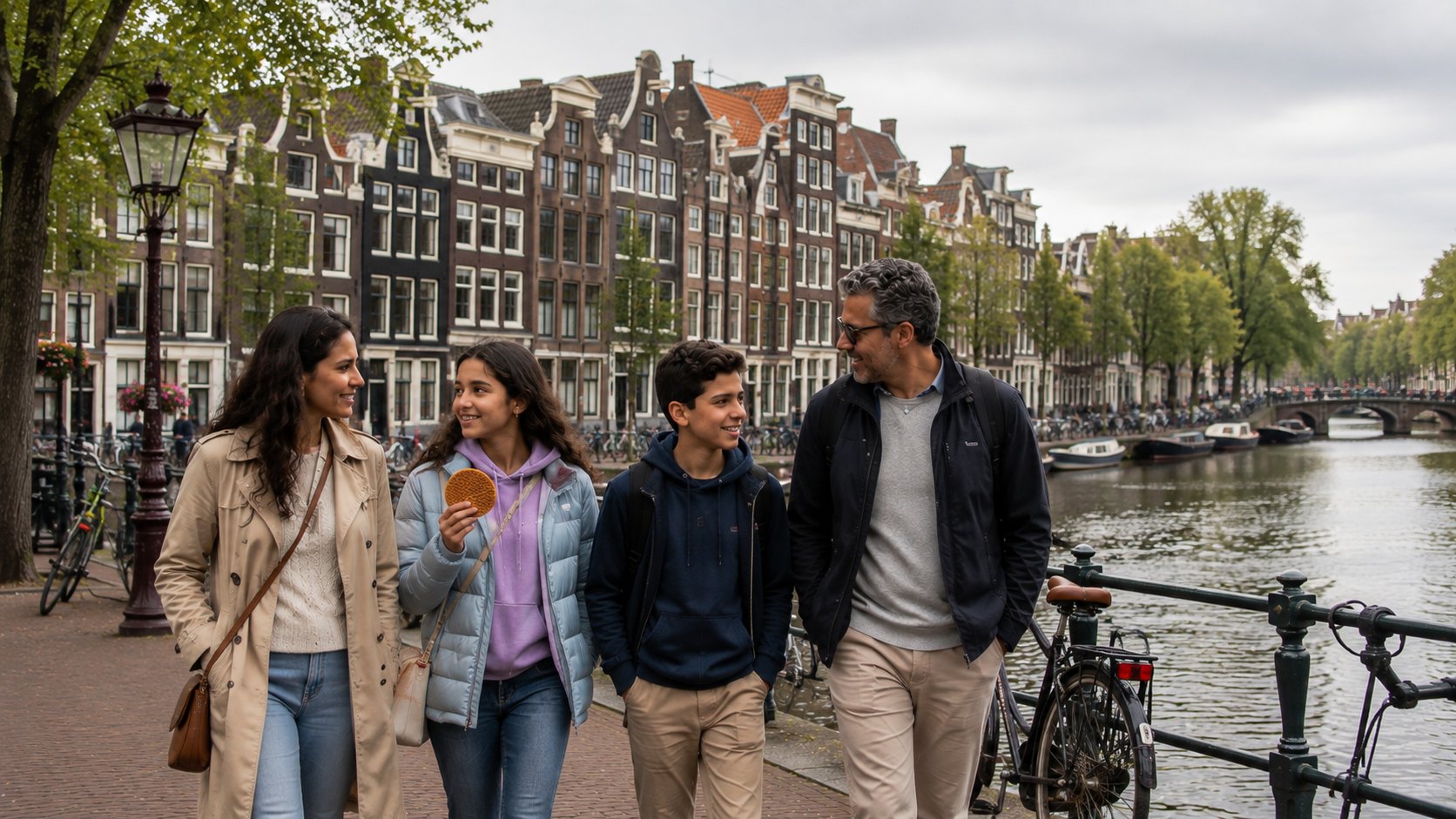
In Amsterdam, I intentionally left our arrival day open because I didn't know whether our train from Paris would be delayed.
It wasn't.
Our hotel concierge helped us book a canal cruise that afternoon.
Again:
Sit down.
See the city.
Recover.
Then after Paris and Amsterdam came something even better:
a sea day.
We boarded Holland America's Rotterdam and suddenly nobody needed to get anywhere.
Jade and Enzo could swim in the heated pool.
I could crochet or read.
Everyone could reset before Scotland and Iceland.
I used to think of downtime as the empty space between the things I planned.
I don't anymore.
Recovery is part of the plan.
Arrival days deserve protection
Amsterdam reinforced something I want to keep doing.
I hadn't booked a major attraction for the afternoon we arrived.
That wasn't because I couldn't find something to do.
It was because transportation has opinions.
Trains get delayed.
Flights get delayed.
People arrive tired.
Luggage becomes annoying.
Instead of designing a schedule that required everything to go perfectly, I protected the arrival day.
When everything did go well, we gained an afternoon.
And that afternoon turned into a canal cruise, grocery stop, giant stroopwafels, wandering around Amsterdam and buying ducks for the cruise.
It felt spontaneous because I had deliberately created room for spontaneity.
There's a difference.
My kids are terrible at following my predicted preferences
I would have predicted that the Eiffel Tower would dominate Paris.
The Louvre surprised us.
They spent around four hours there and wanted to continue looking after completing their Adventure Quest discoveries.
Then we happened upon the Picasso Museum while exploring Le Marais.
That did not produce the same reaction.
Enzo especially found it boring.
In Amsterdam, Van Gogh landed somewhere between those two experiences.
So what do my kids think of art museums?
Apparently:
It depends.
The same thing happened elsewhere.
The kids handled the Arc de Triomphe stairs better than the adults.
Jade and Roberto wanted to escape the sulfur smell at the geothermal area in Iceland while Enzo and I wanted to stay.
Jade came home still talking about how much she liked Amsterdam.
People aren't preference profiles.
Even when they're your own children.
A family isn't one traveler
This sounds obvious until you look at the way itineraries are usually built.
Four people go to Paris.
Therefore:
The family wants to do X.
Except sometimes one person wants X, two people are interested, and one person would rather be literally anywhere else.
We started splitting up more when it made sense.
On our cruise stop in Scotland, I went to a Scotch distillery while Roberto took the kids to see castles and hunt for the Loch Ness Monster.
In St. Thomas on an earlier cruise, Roberto took the kids snorkeling while I went scuba diving.
Then everyone came back together with something to talk about.
I've become much more comfortable with the idea that a successful family trip doesn't require everyone to have the same adventure every hour.
Flexibility isn't the absence of planning
This may be the biggest change.
I used to think of flexibility as what happened when you hadn't planned something.
Now I think good planning creates flexibility intentionally.
You book the Louvre tickets because getting into the Louvre matters.
You leave the Amsterdam arrival afternoon open because you don't know what the train will do.
You reserve the Eiffel Tower because availability matters.
You take a Seine cruise afterward because everyone has been walking.
You let a port day remain simple because yesterday's excursion was exhausting.
You split up because four people want different things.
You change the plan because the weather changed.
That's not an itinerary failing.
That's the itinerary doing its job.
It's changing how I think about Family Trip OS
I came home thinking less about how a travel product can create the perfect itinerary.
I'm not sure the perfect itinerary exists.
I'm much more interested in whether a travel system understands the difference between:
Booked.
Planned.
Maybe.
If the weather cooperates.
We'd like to.
We'll decide when we get there.
We need a break.
Those are all legitimate pieces of a family trip.
And they shouldn't have to be flattened into a calendar full of equally certain activities.
That's increasingly how I'm thinking about Family Trip OS.
Planning intelligence should help a family make better decisions without pretending travel is predictable.
Because the best trip isn't necessarily the one where everything happens exactly according to plan.
Sometimes it's the one with enough structure to get you there—
and enough room for the trip to become something you didn't predict.