 FreeWill Labs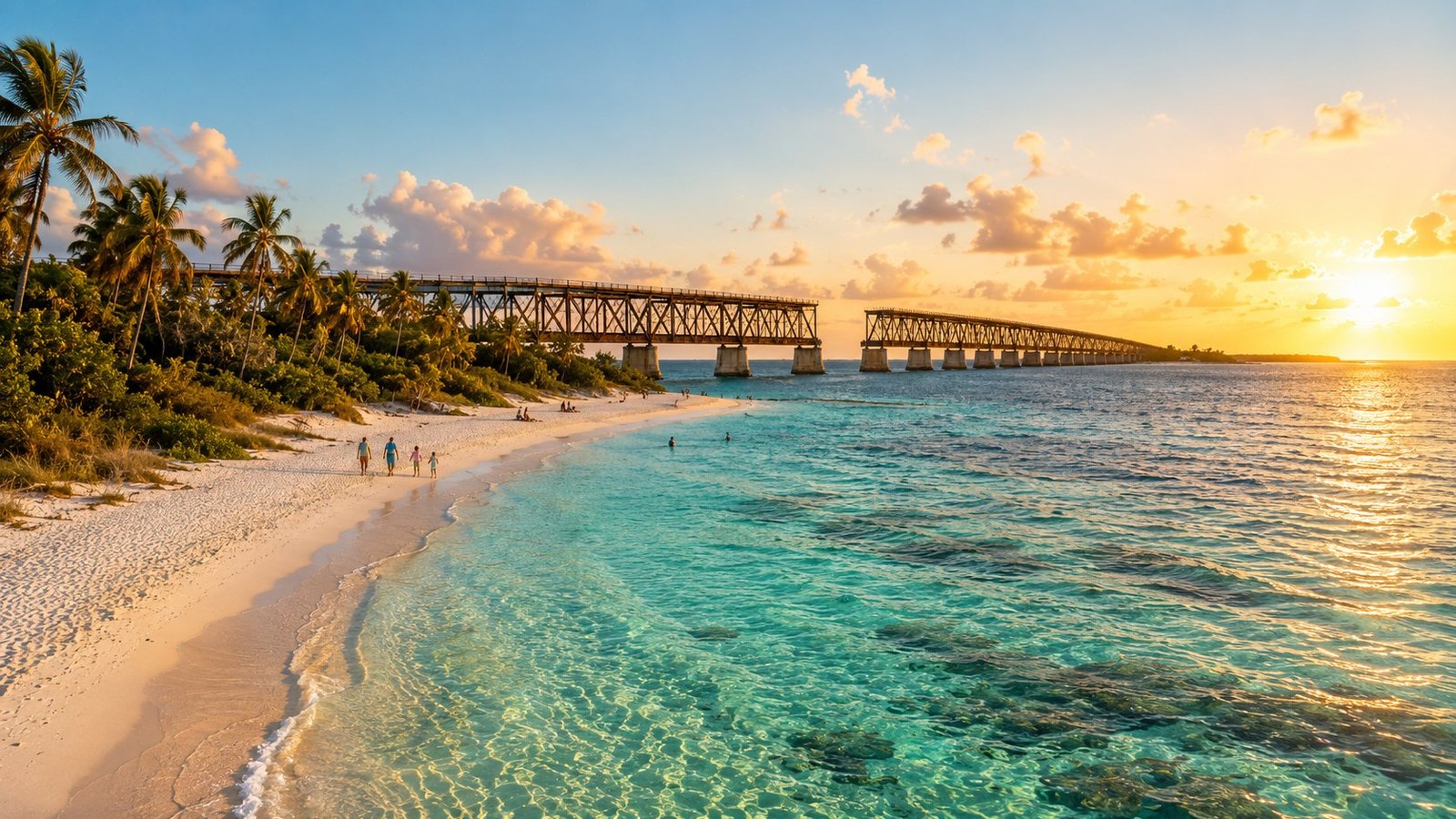
Published August 2026 · Pre-trip guide — Curry Hammock and Bahia Honda will be updated after our September field test.
A few years ago, I celebrated my birthday in the Florida Keys with my family by renting kayaks at John Pennekamp Coral Reef State Park.
We rented two tandem kayaks. Enzo and I took one, and Roberto and Jade took the other. We spent most of our time paddling through the mangroves, with a little bit of open water inside the park.
I remember noticing the difference almost immediately when we left the protection of the mangroves. The open water was harder to paddle. But overall, the trip was exactly the kind of family adventure I love. There weren’t a lot of boats around us, none of us were experienced kayakers, and the whole thing felt adventurous without being stressful.
Now we’re going back to the Florida Keys, but this trip is going to be a little different.
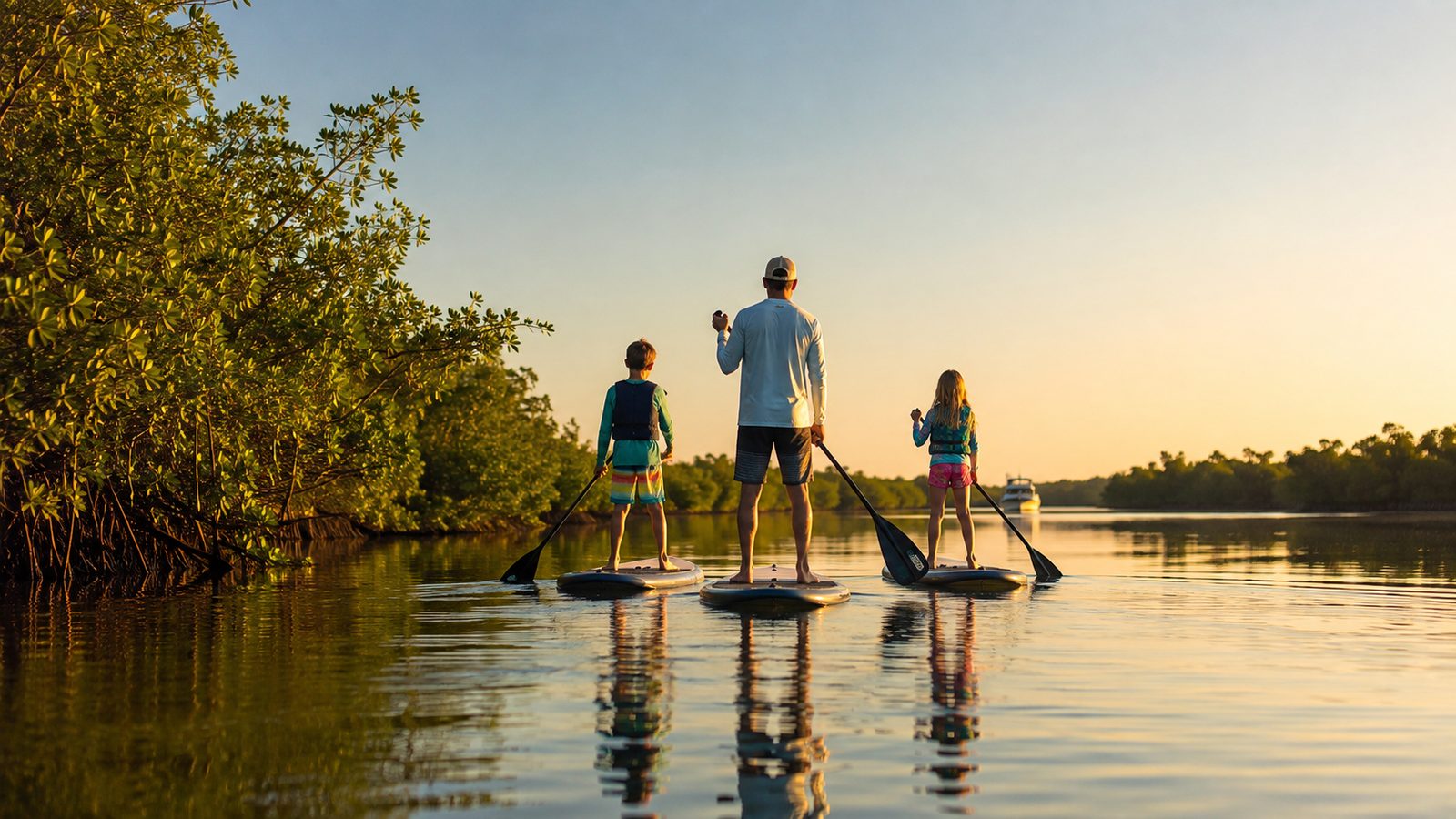
This summer, the kids got their own inflatable stand-up paddleboards. We’re heading to the Keys for a long weekend to celebrate their 11th birthday, visiting three different state parks and bringing the SUPs with us.
And owning the paddleboards has changed the questions I’m asking.
Instead of simply showing up somewhere and renting kayaks, I have to decide whether we should actually put the SUPs in the water.
And I don’t really know how to read wind and current.
I’ve heard both can get strong in the Florida Keys. That’s a much bigger consideration when I’m deciding whether to put my kids on paddleboards.
A place having a kayak launch doesn’t necessarily tell me what I need to know.
Is the water protected? Is this an easy place to SUP? What does today’s wind mean for us? Is there significant current? Would we be better off renting kayaks? And if we decide we want kayaks instead, can we get them nearby?
Those questions eventually became part of the idea behind PaddlePin.
I wanted more intelligence about a place before deciding to paddle it.
So for this birthday trip, I’m looking at three Florida Keys state parks: one we’ve already paddled and two we’re planning to explore.
John Pennekamp: the Florida Keys paddle we’ve already done
John Pennekamp Coral Reef State Park is the one place on this list where I’m not starting from research alone.
We’ve actually kayaked here as a family.
Our tandem-kayak trip through the mangroves was beginner-friendly enough that I remember the experience as relaxing rather than intimidating. Being inside the mangroves provided protection, and the relatively low amount of boat traffic around us made the experience more comfortable.
When we ventured into more open water, however, paddling became noticeably harder.
That experience has stuck with me because it taught me something I didn’t fully appreciate beforehand: two paddles inside the same park can feel very different depending on the water you’re entering.
For a family new to kayaking, the protected mangrove portion of our trip was a really nice introduction.
This time, we’re also hoping to get some snorkeling in from the kayaks or paddleboards. That’s different from simply staying within the mangroves, so I’ll be paying much more attention to conditions before deciding where we go.
Would I kayak John Pennekamp with kids again?
Based on our previous experience: absolutely.
Our mangrove paddle was enjoyable, manageable and not stressful even though we considered ourselves beginners.
Would I automatically assume that means every route around Pennekamp is equally easy?
No—and that’s one of the biggest things I’ve learned while planning this next trip.
Curry Hammock State Park: the place I’m most curious to try
Curry Hammock State Park is one of the places we’re planning to explore on this trip.
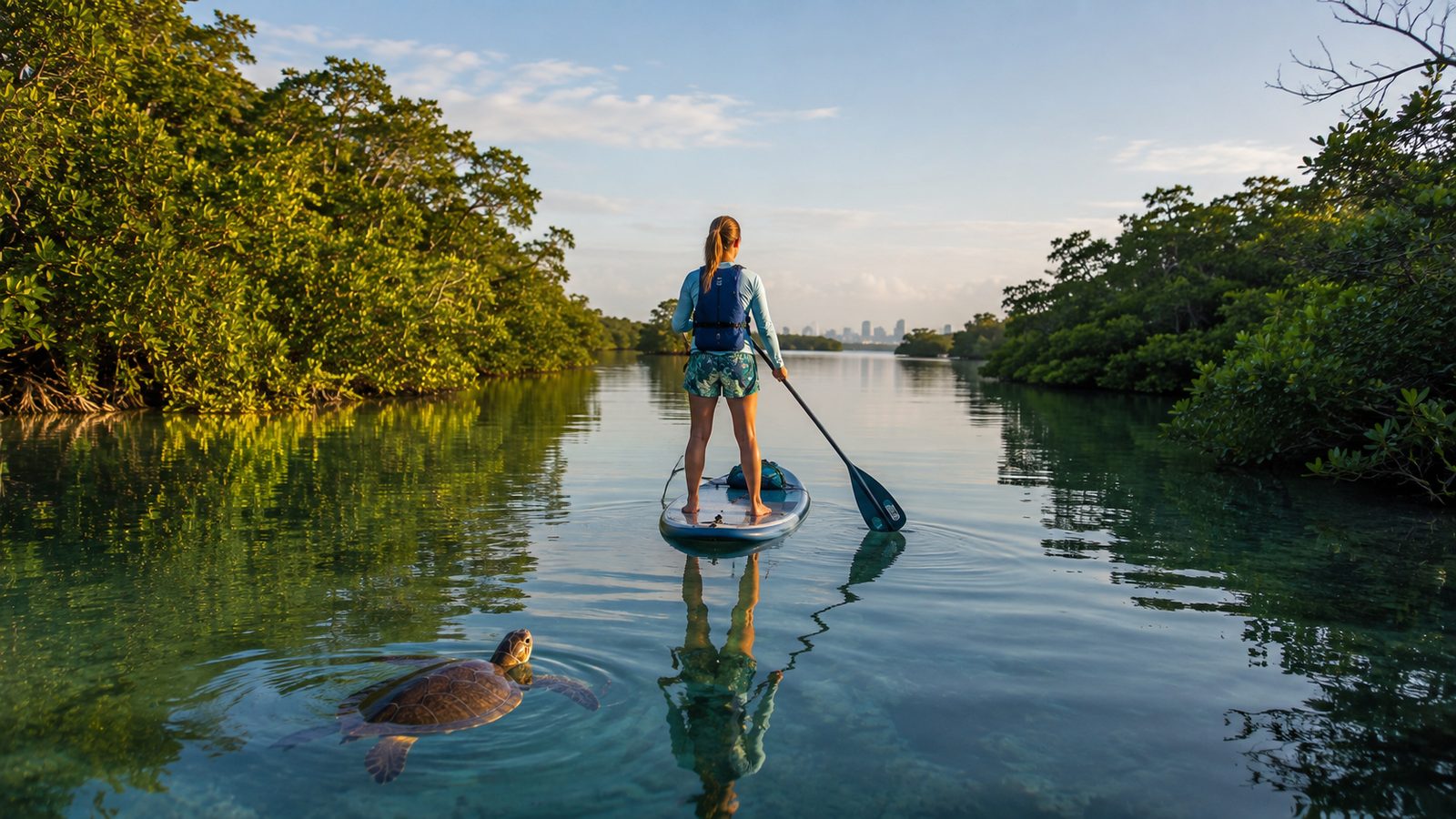
What interests me is the opportunity for a more protected paddle rather than immediately heading into exposed open water.
But this is also where planning becomes more complicated.
A location can look perfect on a map while tide, wind, shallow water or the particular route you choose can completely change the experience.
For our family, the decision won’t simply be “Can we paddle here?”
It will be:
“Does this look like a good SUP paddle for us today, or would we rather be in kayaks?”
That’s an important distinction because we already own the SUPs. Bringing our own boards costs us nothing, but that doesn’t mean I’m committed to using them regardless of conditions.
If kayaking is the better choice that day, I’d rather rent kayaks.
What I’m watching at Curry Hammock
Before putting the boards in, I want to understand:
- wind and how exposed our planned paddle will be
- tide and shallow-water considerations
- where we should actually launch
- whether SUP or kayak makes more sense for the conditions
- hazards along the paddle
- where we could rent different gear if our plans change
This is one of the places we’ll be field-testing during the trip, so I’ll update this section afterward with what we actually experienced.
Bahia Honda: where I’m being more cautious
Bahia Honda State Park is also on our birthday-weekend itinerary, and this is the location where I’m particularly interested in understanding which side and which launch we choose.
My research for PaddlePin has made one thing very clear: treating an entire park as simply “easy” or “hard” isn’t particularly useful.
The water you choose matters.
For our family, the more protected bayside option is the one I’m interested in evaluating for paddling. My current PaddlePin assessment treats kayaking as the steadier choice there, while SUP can be a good option in light wind and around favorable tidal conditions.
That’s an editorial assessment we’re going to field-test, not a promise that the water will be easy when we arrive.
And that’s exactly the distinction I want PaddlePin to make.
Current deserves attention at Bahia Honda
Bahia Honda is also where current becomes something I don’t want to casually ignore.
That doesn’t mean we’re cancelling the paddle. It means I want to look at the conditions, understand what they’re telling me and make a decision when we’re actually there.
If conditions aren’t appropriate for our family’s SUP ability, we’ll do something else.
The goal isn’t to prove we can paddle our boards everywhere.
The goal is to have a great day.
SUP or kayak in the Florida Keys?
This is probably the biggest change in how I’m thinking about paddling.
I used to think of the decision as something you made before leaving home:
We’re going kayaking.
Or:
We’re going paddleboarding.
Owning our SUPs has made me think differently.
The better question may be:
Where do we want to explore, and which craft makes the most sense there today?
Sometimes that answer may be SUP.
Sometimes it may be kayak.
And sometimes the answer may be don’t paddle right now.
For a recreational family like ours, that’s much more useful than assigning ourselves an identity as “paddleboarders” or “kayakers.”
Why I started building PaddlePin Locations
All of this planning created an interesting product problem for me.
PaddlePin originally focused much more on the paddle itself—getting on the water and recording the experience.
But before I could start the paddle, I increasingly wanted help answering a different question:
Where should we paddle?
That led me to start building location intelligence into PaddlePin.
For a PaddlePin location, I want to be able to see things such as:
- where the location is
- where I can launch when that information is verified
- whether I think the location is better suited to SUP or kayak
- how difficult the paddle may be
- hazards or areas I should avoid
- relevant wind, tide or current information
- nearby rental outfitters when we might need different gear
And it fit naturally with the Plan portion of the app.
I realized that discovering a place and deciding whether to paddle there shouldn’t feel disconnected from planning the actual paddle.
The experience I’m working toward is simple:
Find a place → understand the paddle → choose → save it → go paddle.
I’m taking PaddlePin into the Keys to see if this actually works
That’s what makes this trip a little different for me.
Yes, we’re celebrating the twins’ birthday.
We’re going snorkeling, visiting state parks and spending a long weekend together.
But I’m also going to be paying attention.
Does the information I researched match what I see when I’m standing at the launch?
Does a location I’ve rated as beginner-friendly actually feel beginner-friendly with my family?
Can I understand the wind and current information well enough to make a better decision?
Does knowing where to launch make getting four people and their gear onto the water easier?
And what information did I completely miss while sitting at my computer?
Those answers are going back into PaddlePin.
Planning a beginner paddle in the Florida Keys?
The biggest lesson from our first John Pennekamp trip—and from planning this one—is that “good place to kayak” isn’t quite enough information.
The mangroves at Pennekamp felt comfortable for our beginner family. More open water felt different.
Curry Hammock may give us another protected paddling experience, but we’re going to evaluate the actual conditions when we’re there.
At Bahia Honda, I’m paying particular attention to our launch choice, current and whether SUP or kayak makes more sense that day.
If you’re planning your own Florida Keys paddle, especially with kids, I’d start with the same questions I’m asking:
Where am I launching? How protected is the water? What are the wind and current doing? What should I avoid? And is SUP actually the right craft for this paddle?
That’s the information I’m trying to make easier to find with PaddlePin.
And after our birthday trip, I’ll come back and update this guide with what we learned on the water.
Know before you go
PaddlePin.com is where all of this ends up: the location intelligence that made me write this guide — launches, carry, route difficulty, hazards, conditions to watch — on a page for each spot, with an honest note on what’s still unknown. When you go, the PaddlePin iPhone app records the paddle: route, pins named out loud, and photos, saved as a journal you can reopen later.
Browse spots on PaddlePin.com → Get the iPhone app →Newer to paddling? Start with our Miami beginner guide or the Fort Lauderdale one — calmer, closer water to learn on before you drive south. Paddled the Keys with kids and know something I’ve missed? Tell me at concierge@freewilllabs.com.
Curry Hammock and Bahia Honda in this guide are pre-trip research and editorial assessment, not firsthand reports — we have not paddled either yet. PaddlePin is a paddle journal and route memory tool, not a marine navigation or emergency app. Always check conditions and carry proper safety equipment.