 FreeWill Labs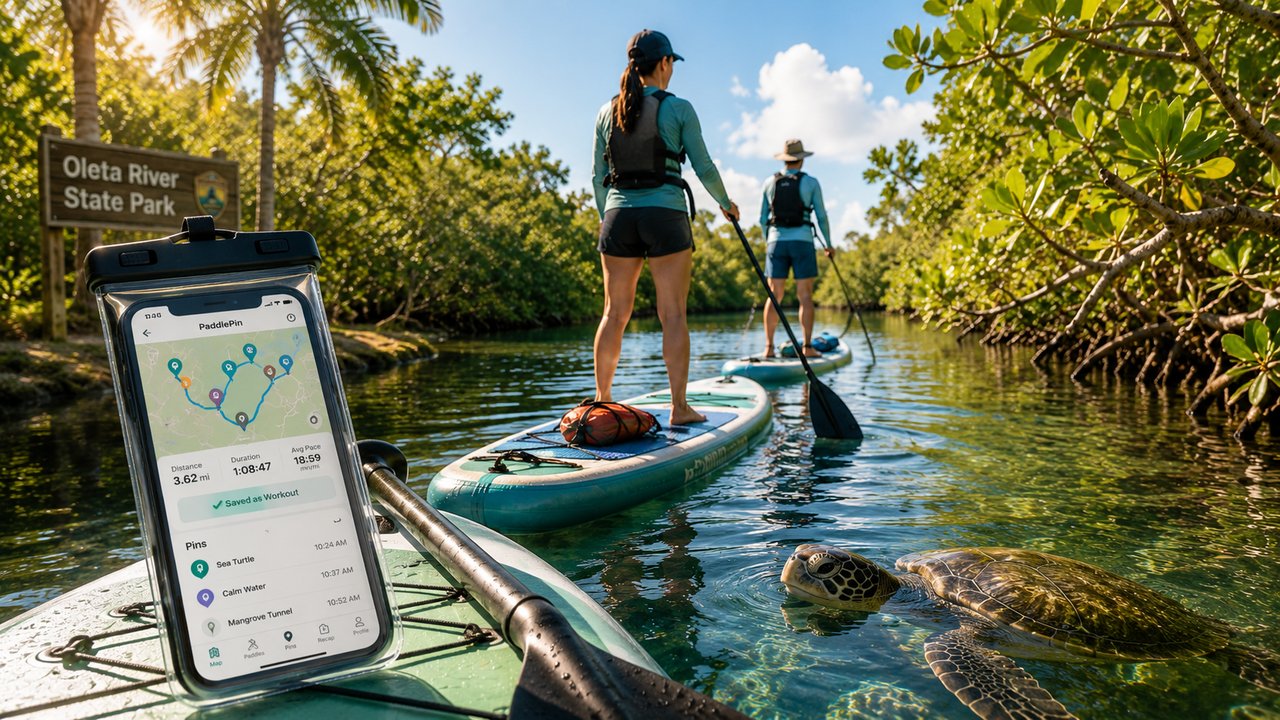
We took an early version of PaddlePin out at Oleta River State Park to learn what a paddle worth remembering actually feels like — and what a small tool could do to support it without getting in the way.
Oleta River State Park is one of those places where the route, water, wildlife, weather, and mood all shape the outing. It is not just "a workout" and it is not just "a pretty place."
It is both.
That is exactly what PaddlePin is trying to understand.
What we were testing
The first question was simple:
Would we actually want to open an app before, during, and after a paddle?
For a paddleboarding app to be useful, it has to respect the reality of being on the water. Your phone may be in a waterproof pouch. Your hands may be wet. The sun may be bright. The wind may shift. You may be trying to balance, steer, talk, watch the sky, and enjoy the moment.
So the product has to be simple.
The early testing focused on:
- Starting a paddle before launch - Tracking the route - Recording distance and duration - Understanding whether the route was captured reliably - Thinking through how pins should work on the water - Noticing what we wanted to remember afterward - Defining what a shareable paddle recap should include - Making sure the workout side matters too
The best moment was not a stat
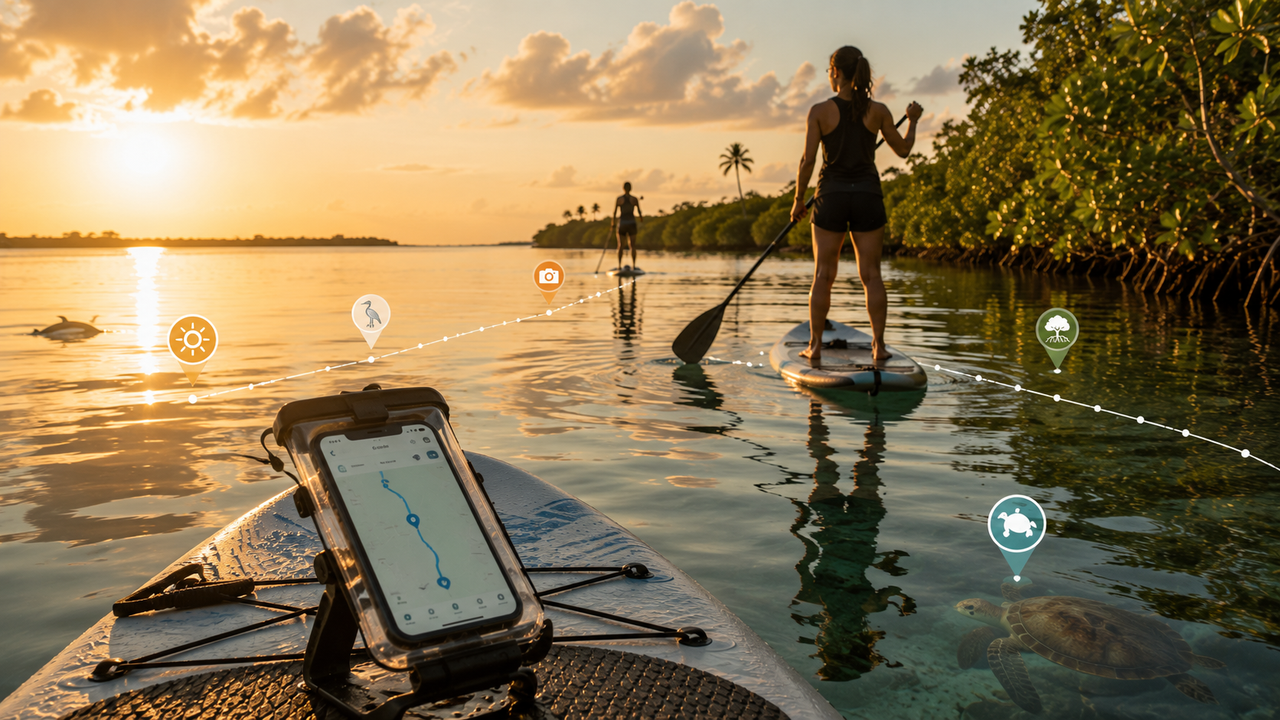
One of the clearest PaddlePin insights came from a previous Oleta paddle: we noticed a sea turtle swimming between us.
That was the moment.
Not the distance.
Not the speed.
Not the pace.
The turtle.
That kind of memory is why PaddlePin cannot just be a fitness tracker. Paddleboarding has a physical side, but the emotional value often comes from what you find on the water.
Wildlife. Calm water. A hidden route. A beautiful view. A funny moment. A place you want to come back to.
PaddlePin needs to capture those things.
But the stats matter too
As we get better at paddleboarding, the route and workout data are becoming more interesting.
We do want to know:
- Where did we go? - How long were we out? - How far did we paddle? - Did we improve? - Was this route easier than last time? - Did this count as our workout for the day?
That means PaddlePin has to balance two jobs:
1. Track the paddle as real movement. 2. Preserve the outing as a memory.
The product should not force users to choose between those two.
What PaddlePin should become
The clearest direction is this:
PaddlePin should be a paddleboarding app for route tracking, workout credit, water notes, and shareable paddle memories.
That means future versions should support:
- Route maps - Distance and duration - Workout saving - Wildlife pins - Launch and rest pins - Caution spots - Calm water notes - Favorite views - Weather or water condition notes - Shareable paddle postcards
The app should make it easy to answer:
Where did we paddle?
What happened?
How did it feel?
Would we do it again?
Early takeaways
The biggest lesson is that PaddlePin should not be "Strava for paddleboarding."
It should be more personal than that.
The workout matters. The route matters. But the reason to come back may be the memory.
A good paddle recap might say:
- Oleta River State Park - 54 minutes on the water - 1.8 miles paddled - Calm route through the mangroves - Wildlife sighting - Best moment: sea turtle between us - Would paddle again
That is the product.
Workout proof plus memory proof.
What we will test next
The next tests will focus on whether PaddlePin can support a real outing without getting in the way.
The key questions:
- Is it easy to start before launch? - Does GPS tracking stay reliable? - Can the phone stay usable in a pouch? - Do pins feel worth using on the water? - Does the paddle feel like it counted as a workout? - Does the recap make us want to remember or share the outing? - Would we open PaddlePin again on the next paddle?
That last question matters most.
PaddlePin succeeds if it becomes something we naturally want to use again.
More field notes soon.